Light vs dark soy sauce: which bottle to buy first
You’ll leave the soy wall knowing whether to grab 生抽, 老抽, or both — and which one if you can only buy one.
Quick picks
- Buy first: small bottle of 生抽 light soy (naturally brewed if labeled).
- Buy second (optional): small 老抽 dark soy if you braise or want darker fried rice.
- Decision rule: if you can only buy one, take light soy.
Decision rule
If the cart only has room for one soy bottle on trip one, buy light soy sauce (生抽). It seasons. Dark soy (老抽) mostly paints food a deeper brown — useful, not the everyday salter.
Shelf match (if you can’t read Chinese)
Use the photo, then confirm characters on the label. Brands vary; shapes and label colors are the fast filter.
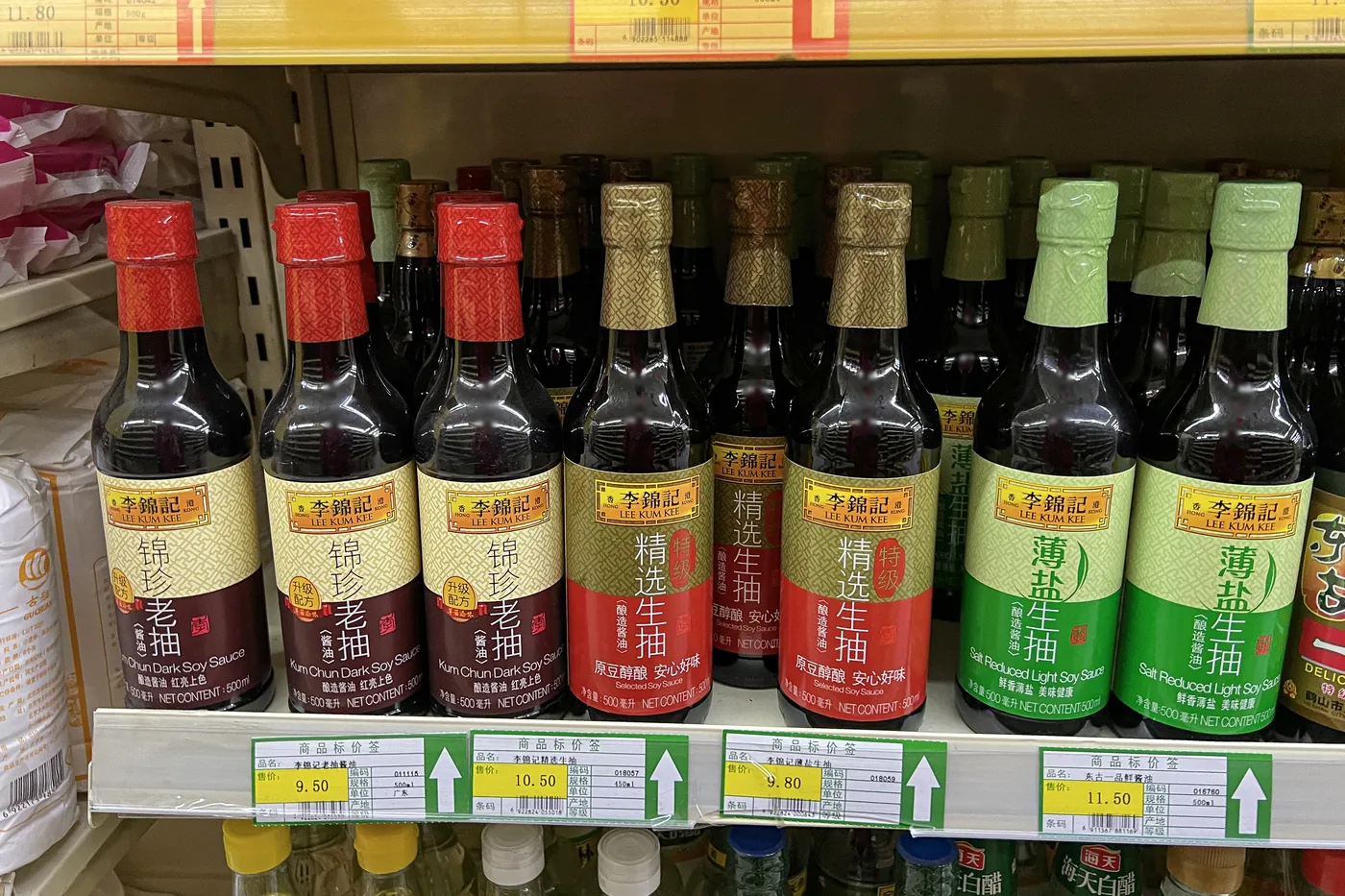
Photo: Wikimedia Commons (Lee Kum Kee examples — brands vary by store)
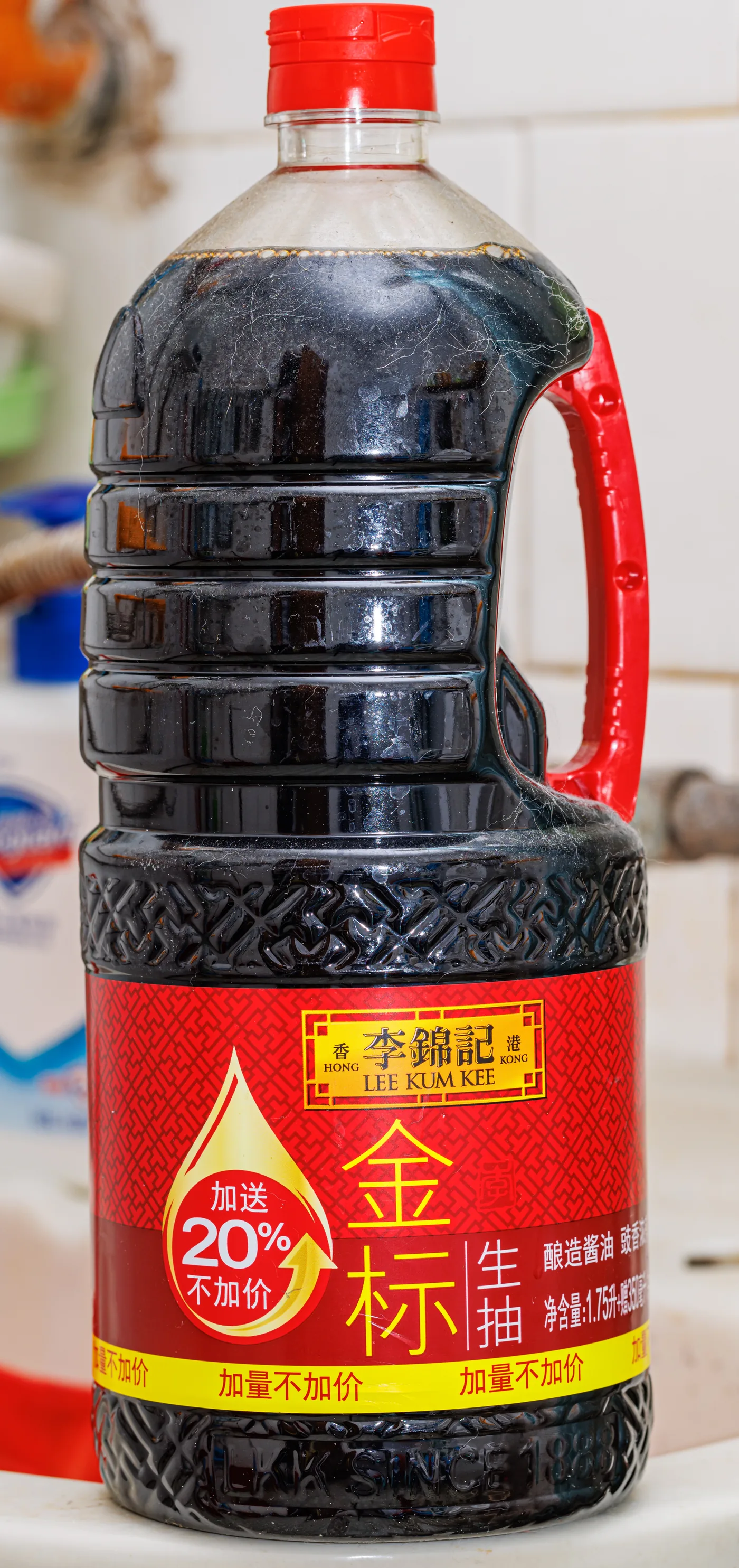
Photo: Wikimedia Commons
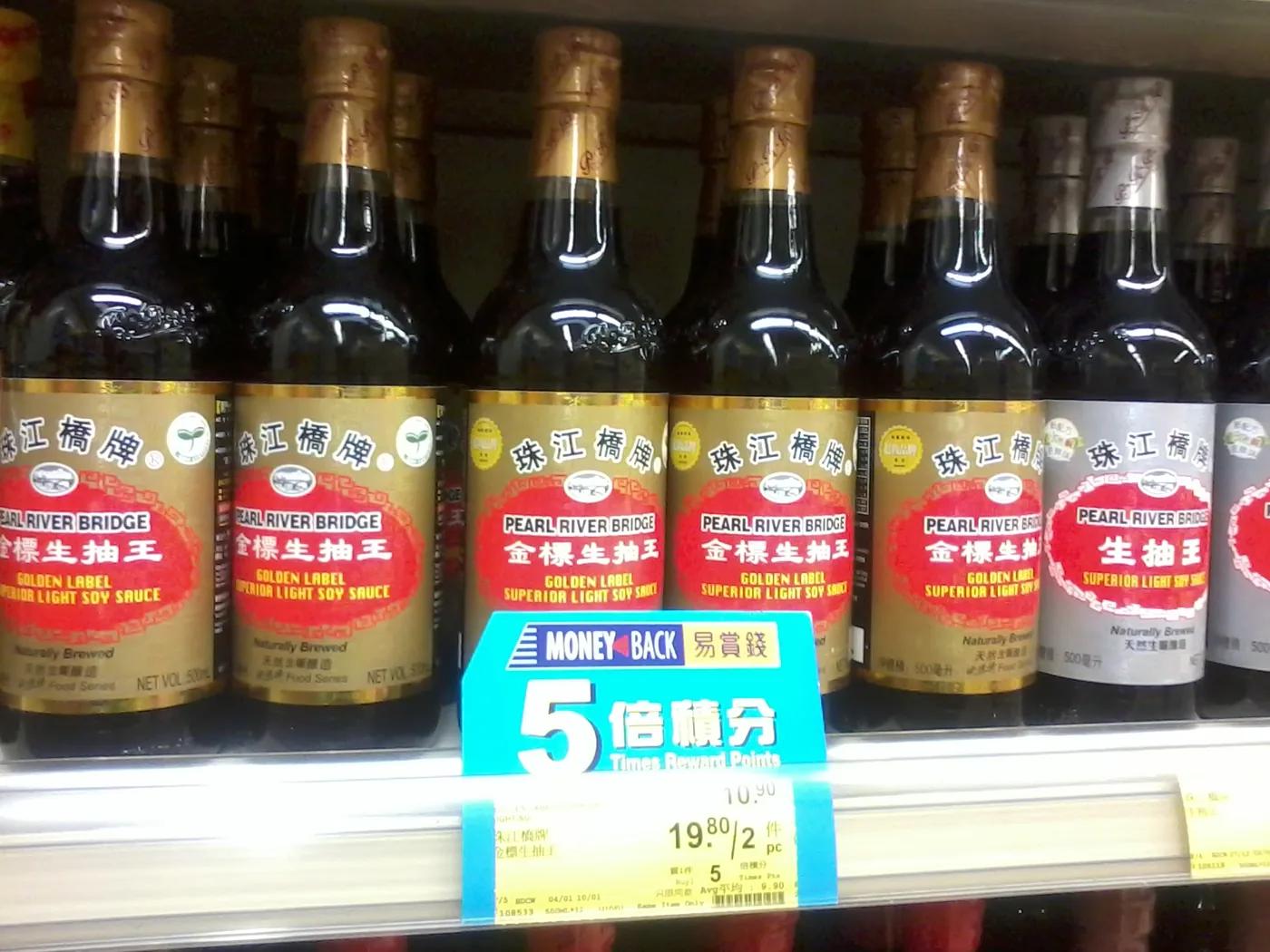
Photo: Wikimedia Commons
Comparison
| Light soy 生抽 | Dark soy 老抽 | |
|---|---|---|
| Job | Salt, aroma, everyday seasoning | Color for braises, red-cooked dishes, some fried rice |
| Taste / texture | Saltier, thinner, lighter color | Sweeter/molasses notes, thicker, much darker |
| When recipes say “soy sauce” | Usually this — unless they specify dark | Only when they ask for dark / color |
| First bottle? | Yes | Trip 1 optional / Trip 2 fine |
Japanese-style soy and generic “soy sauce” jugs in a non-Chinese aisle are different products. For Chinese recipes that call for light/dark, shop the Chinese labels when you can.
Label decoder
- 生抽 — light / fresh-drawn soy. English may say “light soy,” “superior soy,” or just “soy sauce” plus Chinese characters — read the characters.
- 老抽 — dark soy. Often “dark soy sauce.”
- Naturally brewed — prefer when labeled; avoid assuming every cheap jug is the same process.
- Low-sodium — useful if you need it; not identical to “light” in the Chinese light/dark sense.
- Brands commonly seen (examples, not endorsements): Pearl River Bridge, Lee Kum Kee, and many import labels. Stock rotates.
Buy
- Small 生抽 for trip one
- Optional small 老抽 if you already braise
- Bottles you can actually read (Chinese + English help)
Skip (for now)
- Huge value jugs until you know your usage
- Buying five “specialty” soys before one light soy
- Assuming “light” on a Western label means 生抽
Storage
Sealed soy is pantry-stable. After opening, follow the bottle; many cooks keep soy in a cool cupboard. Wipe the rim so the cap doesn’t cement shut.
What this unlocks
- Simple veggie stir-fries seasoned with light soy + garlic
- Marinades for tofu or chicken (light soy + Shaoxing + a pinch of sugar)
- Darker fried rice color when you add a splash of dark soy later
Put it on the list. Light soy is item one on the first-cart checklist.
Open first-cart checklistFAQ
Is light soy the same as low-sodium soy?
No. Chinese “light” (生抽) is about style and color, not automatically “less salt.” Check sodium on the nutrition label if that matters to you.
Can I substitute dark for light?
Not 1:1. Dark will stain food and taste different. If a recipe means everyday seasoning, use light.
What about tamari or coconut aminos?
Different products for different diets. This guide is about the Chinese light/dark pair on a Chinese aisle.
Why do people say never buy certain supermarket soys?
Home cooks often prefer naturally brewed Chinese-aisle options over heavily adulterated “oriental” sauces. Read ingredients; your store’s best option may differ.